Table of Contents
ToggleThe Cathedral of St Paul, Mdina: A Jewel of Malta’s Silent City
Located in the heart of the ancient fortified walls of Mdina, Malta’s historic “Silent City,” stands the magnificent Cathedral of St Paul—an architectural masterpiece and spiritual landmark that embodies centuries of Maltese history, faith, and artistry. Rising gracefully above the golden limestone skyline, the cathedral is not only a place of worship but also a testament to resilience and cultural identity.
Historical Origins
The origins of St Paul’s Cathedral date back to the 12th century, although tradition holds that the site marks the location where the Roman governor Publius met the Apostle Paul following his shipwreck on Malta around 60 AD. This connection makes the cathedral deeply significant in Maltese religious tradition, anchoring it to one of Christianity’s earliest narratives on the island.

Reconstruction and Baroque Design
However, the structure that visitors admire today is largely the result of reconstruction in the late 17th century. A devastating earthquake in 1693 struck parts of Sicily and Malta, severely damaging the original medieval cathedral. In response, the Maltese architect Lorenzo Gafà was commissioned to design a new cathedral, completed in 1702. Gafà’s work reflects the Baroque style that was popular at the time, grand, expressive, and intricate, perfectly suited to convey the power and beauty of faith.
Architectural Features
The cathedral’s façade is both elegant and imposing, with twin bell towers flanking a central entrance crowned by Corinthian columns. Its symmetrical design draws the eye upward, inviting visitors to pause and appreciate the harmony and balance of the structure. Yet it is inside the cathedral where the true splendor unfolds.
Interior Highlights
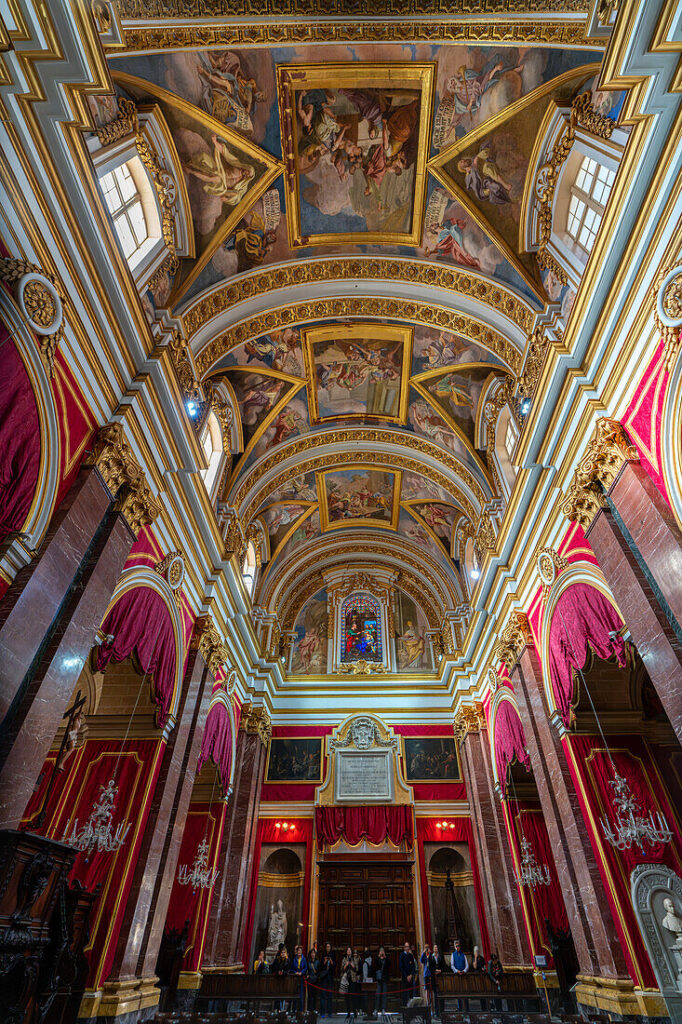
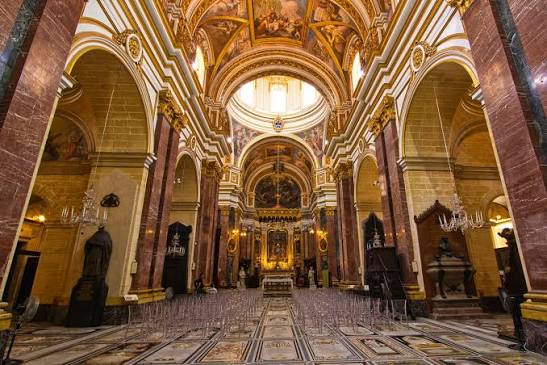
Upon entering, visitors are greeted by an opulent interior adorned with richly decorated ceilings, gilded details, and masterful works of art. The nave features a series of chapels dedicated to various saints, each filled with paintings, sculptures, and elaborate altars. The cathedral’s ceiling, painted in the early 18th century by Mattia Preti, depicts scenes from the life of St Paul, adding both visual drama and narrative depth to the space.
The Marble Floor
One of the most remarkable features is the marble floor, composed of intricately inlaid tombstones belonging to bishops and noble figures. These decorative slabs, each uniquely designed, create a mosaic-like effect that adds both beauty and historical depth to the cathedral. Walking across the floor, one is reminded of the generations who have shaped and been shaped by this sacred space.
The Cathedral Museum
Another highlight is the cathedral museum, located adjacent to the main building. Housed in the former seminary, the museum boasts an impressive collection of religious artifacts, including silverware, vestments, manuscripts, and a remarkable series of engravings by Albrecht Dürer. These works provide insight into the broader European artistic influences that have enriched Malta’s cultural heritage.
A Living Place of Worship
Beyond its artistic and historical significance, St Paul’s Cathedral remains a vibrant and active place of worship at the heart of Mdina’s community life. Daily Masses, special liturgies, and seasonal services ensure that the cathedral is continually animated by prayer and devotion. The rhythm of the Catholic calendar, from Advent and Christmas to Lent and Easter—is deeply felt within its walls, with ceremonies that blend solemnity, tradition, and communal participation. The sound of bells, the fragrance of incense, and the gathering of parishioners all contribute to an atmosphere that is both sacred and welcoming.
The cathedral serves not only the residents of Mdina but also the broader Maltese community, attracting worshippers and visitors from across the island. Important life events such as baptisms, weddings, and funerals are regularly held here, making the cathedral a setting for personal as well as collective milestones. This ongoing use reinforces its role as a living institution rather than a static monument frozen in time.